


[Registration Open] (Hybrid Format) Kick-off Symposium: Rethinking Social Investment in “Brain Health” (April 6, 2026)
date : 3/23/2026
Tags: Dementia

![[Registration Open] (Hybrid Format) Kick-off Symposium: Rethinking Social Investment in “Brain Health” (April 6, 2026)](https://hgpi.org/en/wp-content/uploads/sites/2/HGPI_Event_02060406_BrainHealth.jpg)
In December 2025, Health and Global Policy Institute (HGPI) published a policy recommendation addressed to the new administration entitled: “Strategic Investments in Policies for Brain Health to Revitalize Japan: Hopes for the New Administration” In this document, HGPI emphasized the importance of positioning brain health at the core of Japan’s national growth strategy.
In FY2026, building upon its experience in dementia policy, HGPI will launch a project aimed at examining how Japanese society might conceptualize “brain health” across the entire life course. The project seeks to explore how social systems can be designed to both:
- Foster a society capable of generating and utilizing innovation; and
- Realize an inclusive society in which no one is left behind, irrespective of their health status or disability.
This symposium marks the official launch of the project. At its core lies the concept of “Brain Capital”, which has recently attracted growing attention within the international community. The symposium aims to clearly position approaches to brain health not merely as social costs, but as investments in Japan’s future. “Brain Capital” refers to the aggregate of brain health and brain skills that individuals and societies can cultivate and strengthen throughout the life course. It constitutes a foundational asset underpinning labor productivity, innovative capacity, and the sustainability of society itself. An economic and social model grounded in Brain Capital is described as the “Brain Economy.” Brain Capital is simultaneously:
- An asset belonging to individuals; and
- A shared societal foundation that must be protected and nurtured collectively.
If one accepts that a sustainable economy and society depend upon enabling all individuals to maintain and enhance their brain health, then investment in brain health must be understood not only as human capital development, but also as investment in the realization of a society in which no one is excluded. However, this perspective also raises an important question. If social investment in brain health disproportionately favors those deemed “high return” individuals, while those with severe symptoms or socioeconomic disadvantage are left behind, such investment cannot truly be regarded as investment in society’s foundation.
This symposium therefore addresses this inherent tension. It seeks to explore how strategic investment in Brain Capital can be integrated with the construction of an inclusive society in which all individuals, regardless of symptoms or disease progression, are able to maintain dignity, social connectedness, and opportunities for participation.
While dementia serves as the starting point, the issues under discussion extend beyond dementia and include other neurological and neuropsychiatric conditions such as depression and epilepsy.
Furthermore, from an inclusive standpoint, the symposium will also consider future prospects for innovation in brain health.
For example, in the context of dementia, Japan has built a foundation for an inclusive society. Building upon this, it is essential to create a society in which individuals may exercise agency across the continuum, from preventive measures prior to onset, to post-diagnosis treatment, and to medical intervention in advanced stages, according to their circumstances, preferences and individual differences.
Innovation in brain health represents one of the fields expected to expand significantly in the coming years. Accordingly, discussions will address:
- Academic perspectives and research foundations;
- Strategies for strengthening research infrastructure;
- Social implementation;
- Industrial development and application.
This symposium aims to provide a forum for open and forward-looking dialogue among national and local government representatives, academia with diverse perspectives, and industry stakeholders.
Through these discussions, the symposium seeks to connect Japan’s experience to the global discourse on Brain Capital and to lay the groundwork for advancing inclusive and sustainable social systems grounded in a life-course approach to brain health.
|
*The deadline for In-person participation is
Thursday, February 26, 2026. |
Zoom Registration: You will be redirected to the Zoom webinar registration page. Registration will remain open until the day of the event. |
*Participants wishing to attend in person who are not selected due to capacity limits are advised to complete online registration in advance.
[Event Overview]
- Date & Time: Monday, April 9, 2026, 09:00-12:30 JST
- Format: In person / Online (Zoom webinar)
- Venue: Sakura Room, 4th Floor, Main Building, Imperial Hotel Tokyo (1-1-1 Uchisaiwaicho, Chiyoda-ku, Tokyo)
- Language: Japanese and English (simultaneous interpretation provided)
- Participation Fee: Free
- Capacity: in person 50 participants (lottery selection if applications exceed capacity) / online 500 participants
- Organizer: Health and Global Policy Institute (HGPI)
- Sponsors: Eli Lilly Japan K.K.; Otsuka Pharmaceutical Co., Ltd.; SOMPO Holdings Inc.
[Program] (Titles omitted; speaker list and content is subject to change)
| 09:00-09:10 | Opening Remarks |
| Ryoji Noritake (Chair, HGPI) | |
| 09:10-09:25 | Introduction and Context Setting |
| Shunichiro Kurita (Senior Manager, HGPI) | |
| 09:30-09:50 | Keynote Lecture: “The Brain Economy: Positioning Brain Health as the Foundation of Economy and Society” |
| Harris Eyre (Lead and Senior Fellow in Neuro-Policy, Rice University’s Baker Institute for Public Policy) | |
| 10:00-11:00 | Panel Discussion 1: Cultivating a Society and Culture that Approaches Brain Health Across the Life Course: Integrating Innovation and an Inclusive Society |
|
Panelists: |
|
| 11:10-11:40 |
Presentation Session: Innovation in Brain Health |
|
“Building a Society That Accelerate Brain Health: Innovation for a Future Without Fear of Alzheimer’s Disease” (Provisional Title) “Brain Health × Music Science” (Provisional Title) |
|
| 11:40-12:30 | Panel Discussion 2: Advancing and Strengthening the Foundations of Research in Brain Health |
|
Panelists: |
Related Posts
-
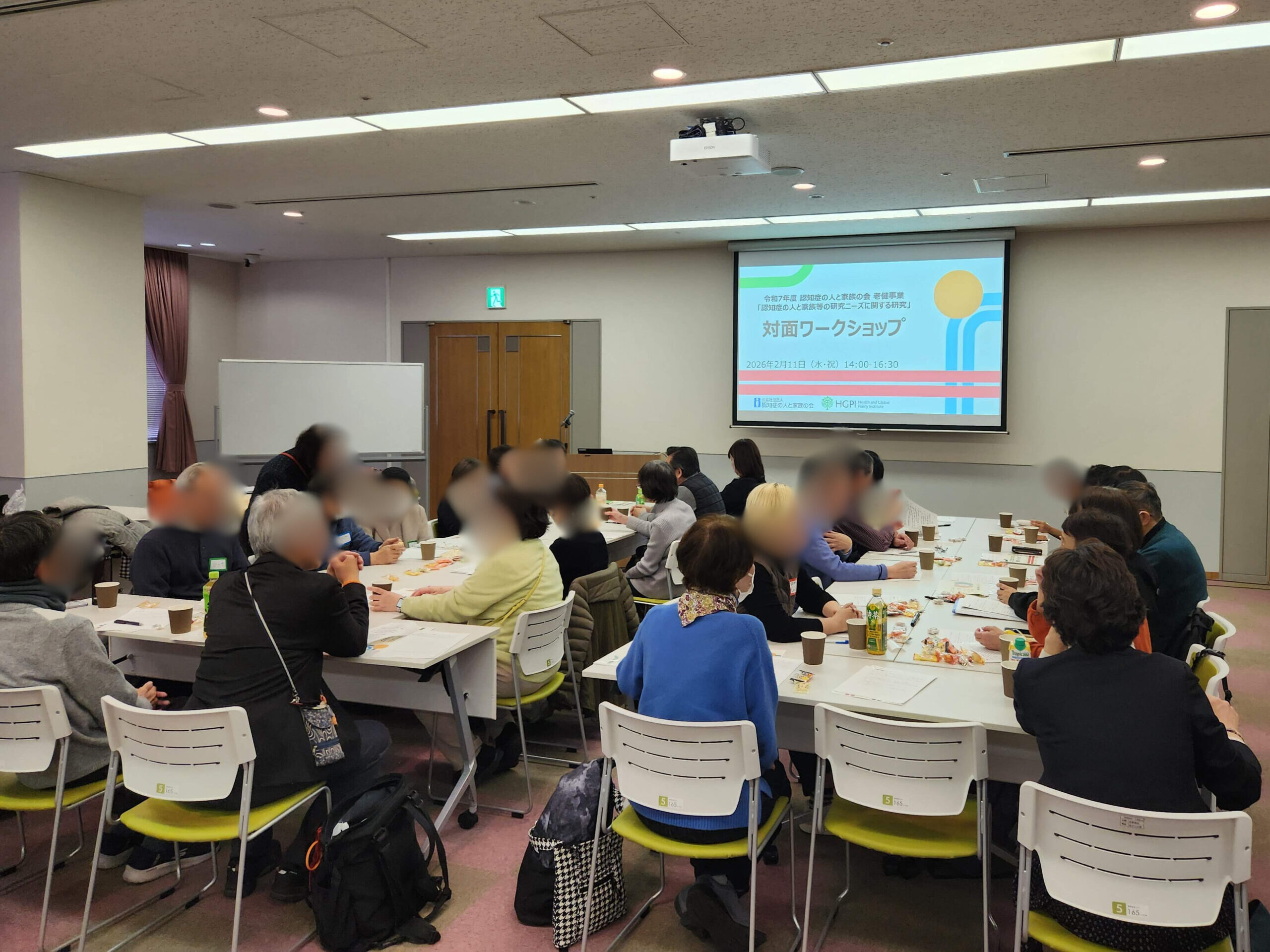
2026-03-02
[Event Report] FY2025 Long-term Care Business Project Workshop: "Research on the Research Needs of People with Dementia and Their Families" (February 3 and 11, 2026)
-

2025-12-18
[Event Report] Québec–Japan Dialogue on Ageing Webinar "Bridging Research and Policy Ecosystems" (December 9, 2025)
-
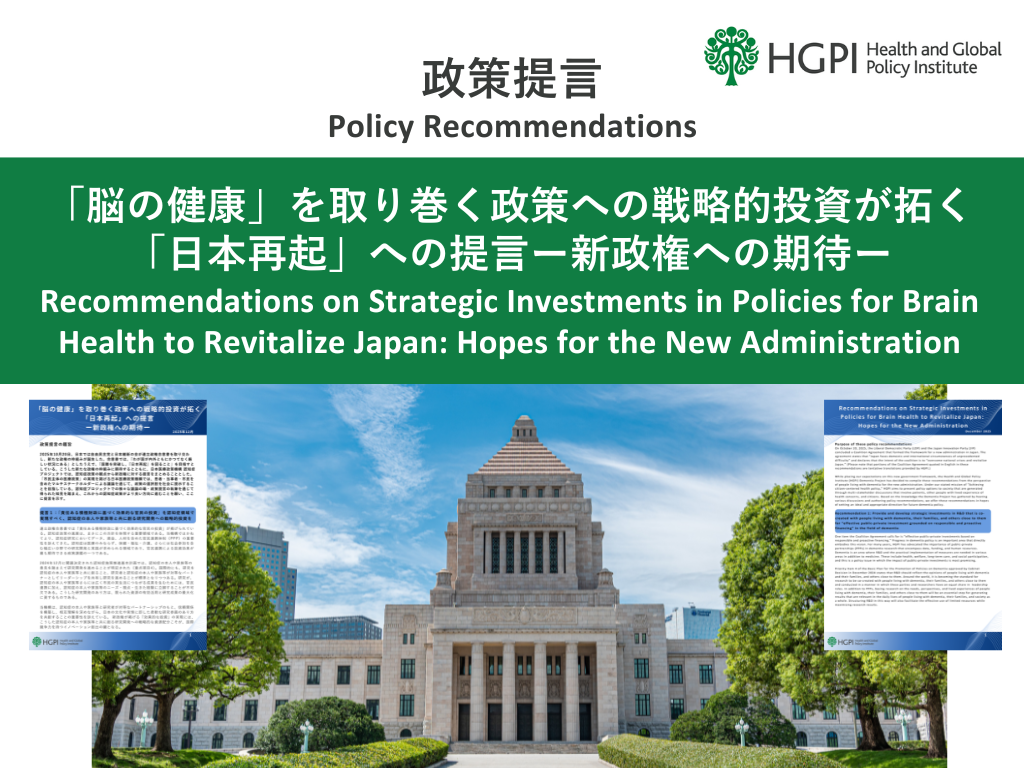
2025-12-01
[Policy Recommendations] Recommendations on Strategic Investments in Policies for Brain Health to Revitalize Japan: Hopes for the New Administration (December 1, 2025)
-
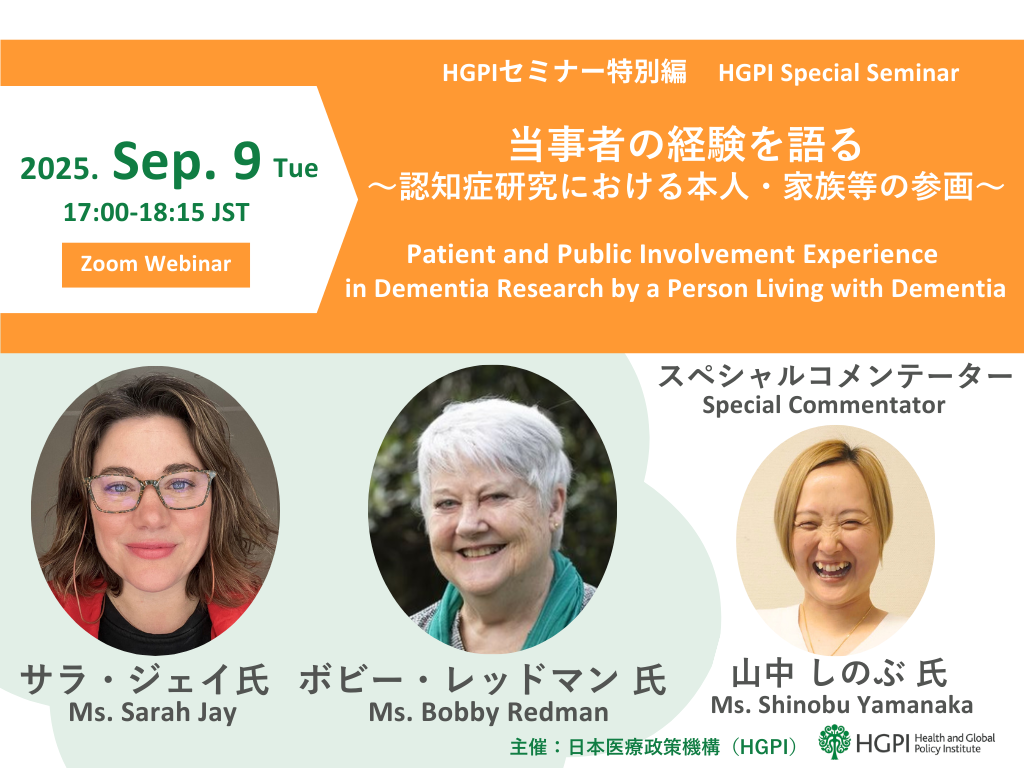
2025-11-13
[Event Report] HGPI Special Seminar Commemorating Dementia Month and World Alzheimer’s Month “Patient and Public Involvement Experience in Dementia Research by a Person Living with Dementia” (September 9, 2025)
-

2025-09-16
[Policy Recommendations] Dementia Project Information Packet for Local Government Officials “Dementia Policies for Our City: Taking the First Step in Promoting Future Measures for Dementia” (March 17, 2025)
-
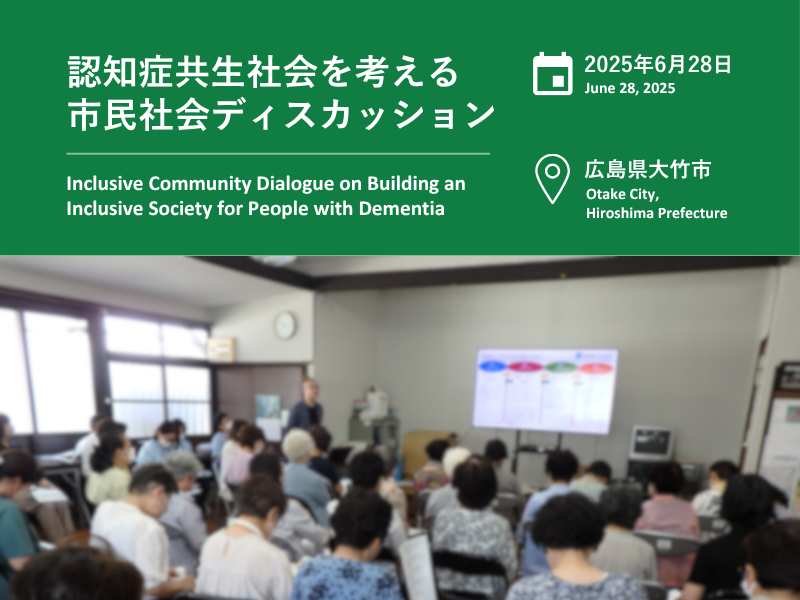
2025-07-08
[Event Report] Inclusive Community Dialogue on Building an Inclusive Society for People with Dementia – Otake City, Hiroshima Prefecture (June 28, 2025)
-

2026-03-11
[HGPI Policy Column] (No. 69) From the Dementia Project “Urban Design Protects Our Health: The Potential of 'Healthy by Default' Cities to Harmonize Coexistence and Prevention”
Top Research & Recommendations Posts
- [Research Report] Perceptions, Knowledge, Actions and Perspectives of Healthcare Organizations in Japan in Relation to Climate Change and Health: A Cross-Sectional Study (November 13, 2025)
- [Policy Recommendations] Reshaping Japan’s Immunization Policy for Life Course Coverage and Vaccine Equity: Challenges and Prospects for an Era of Prevention and Health Promotion (April 25, 2025)
- [Research Report] The 2025 Public Opinion Survey on Healthcare in Japan (March 17, 2025)
- [Research Report] The 2026 Public Opinion Survey on Healthcare in Japan (February 13, 2026)
- [Research Report] Building a Mental Health Program for Children and Measuring its Effectiveness (June 16, 2022)
- [Research Report] The Public Opinion Survey on Child-Rearing in Modern Japan (Final Report) (March 4, 2022)
- [Research Report] Energy Conservation and Greenhouse Gas Emissions Reduction in Healthcare Facilities: Case Studies from New Construction and Facility Renewal (March 16, 2026)
- [Research Report] 2019 Survey on Healthcare in Japan
- [Policy Recommendations] Developing a National Health and Climate Strategy for Japan (June 26, 2024)
- [Policy Recommendations] Mental Health Project: Recommendations on Three Issues in the Area of Mental Health (July 4, 2025)
Featured Posts
-
2026-02-13
[Research Report] The 2026 Public Opinion Survey on Healthcare in Japan (February 13, 2026)
![[Research Report] The 2026 Public Opinion Survey on Healthcare in Japan (February 13, 2026)](https://hgpi.org/en/wp-content/uploads/sites/2/HGPI_The2026PublicOpinionSurveyOnHealthcareInJapan_20260213.jpg)
-
2026-03-03
[Registration Open] Online Seminar “Implementing Chronic Kidney Disease (CKD) Measures into Society: Towards a Data-Driven Health System” (April 21, 2026)
![[Registration Open] Online Seminar “Implementing Chronic Kidney Disease (CKD) Measures into Society: Towards a Data-Driven Health System” (April 21, 2026)](https://hgpi.org/en/wp-content/uploads/sites/2/HGPI_20260421_CKDonlineseminar-.png)
-
2026-03-16
[Research Report] Energy Conservation and Greenhouse Gas Emissions Reduction in Healthcare Facilities: Case Studies from New Construction and Facility Renewal (March 16, 2026)
![[Research Report] Energy Conservation and Greenhouse Gas Emissions Reduction in Healthcare Facilities: Case Studies from New Construction and Facility Renewal (March 16, 2026)](https://hgpi.org/en/wp-content/uploads/sites/2/HGPI_20260316_GHG-Reduction-Case-Studies.jpg)
-
2026-03-23
[Registration Open] (Hybrid Format) Kick-off Symposium: Rethinking Social Investment in “Brain Health” (April 6, 2026)
-
2026-03-23
[Registration Open] Application for the Health Policy Academy the 15th Session (Session Starts July 2026)
![[Registration Open] Application for the Health Policy Academy the 15th Session (Session Starts July 2026)](https://hgpi.org/en/wp-content/uploads/sites/2/HGPI_20260319_HPA15.jpg)
